|

Keynote Speakers
|
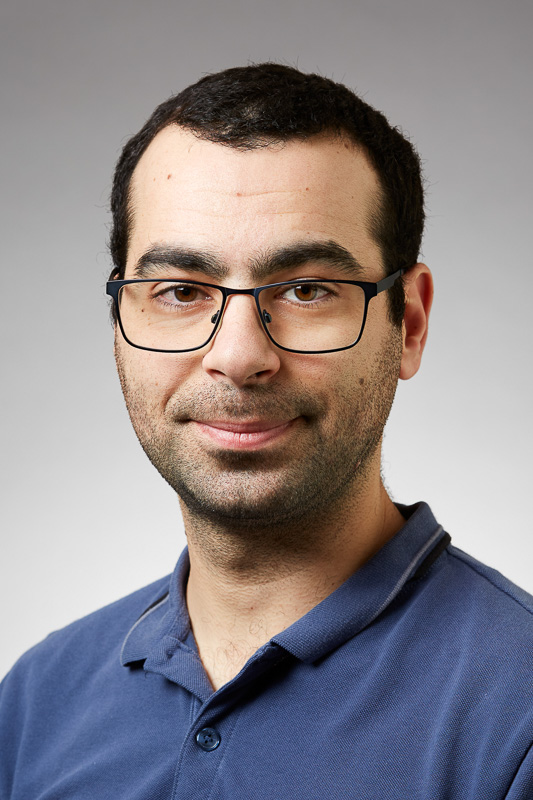
International Keynote: Prof. Dr. Cláudio Ângelo Gonçalves Gomes (Department of Electrical and Computer Engineering - Software Engineering & Computing systems - Turing, Denmark) |
Title: Introduction to co-simulationAbstract: Modeling and simulation techniques are now widely used in both industry and science. In complex systems, sub-systems are typically modeled and simulated by different techniques, tools and algorithms. Furthermore, experts from different disciplines adopt various models and simulation techniques, making difficult the study of complex systems due to the difficulty in creating a model of the complete system. Co-simulation is an emerging technique, where the global simulation of a complex system can be achieved by composing the simulations of its parts. Due to its potential and interdisciplinarity, co-simulation is being studied in different disciplines, but with limited sharing of results. In this presentation, I will introduce state-of-the-art co-simulation techniques, with the aim of improving future research and highlighting key challenges. |
|
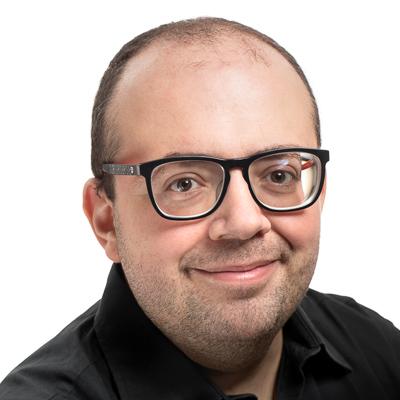
International Keynote: Prof. Dr. Leonardo Montecchi (Department of Computer Science Faculty of Information Technology and Electrical Engineering, Norway) |
Title: The role of Model-Driven Engineering as a support to simulationAbstract: Model-Driven Engineering (MDE) advocates the use of models as primary artifacts in the software development process. Following this philosophy, developers "program" using models, and source code is automatically generated from such abstract representations of the intended product. While MDE roots are in software development, its application has expanded to very different domains, including for example automating system reliability analysis by simulation of probabilistic models. In this talk, I will recall the basic concepts of MDE, and then discuss some of its applications that extend outside the traditional software development area. In particular, I will discuss how MDE can play a fundamental role in making simulation tools and techniques accessible to a wider audience, based on my research experience in the CHESS and CONCERTO projects. |